Indian businesses are not struggling because digital marketing doesn’t work.
They struggle because they don’t follow a clear digital marketing guide for businesses in India.
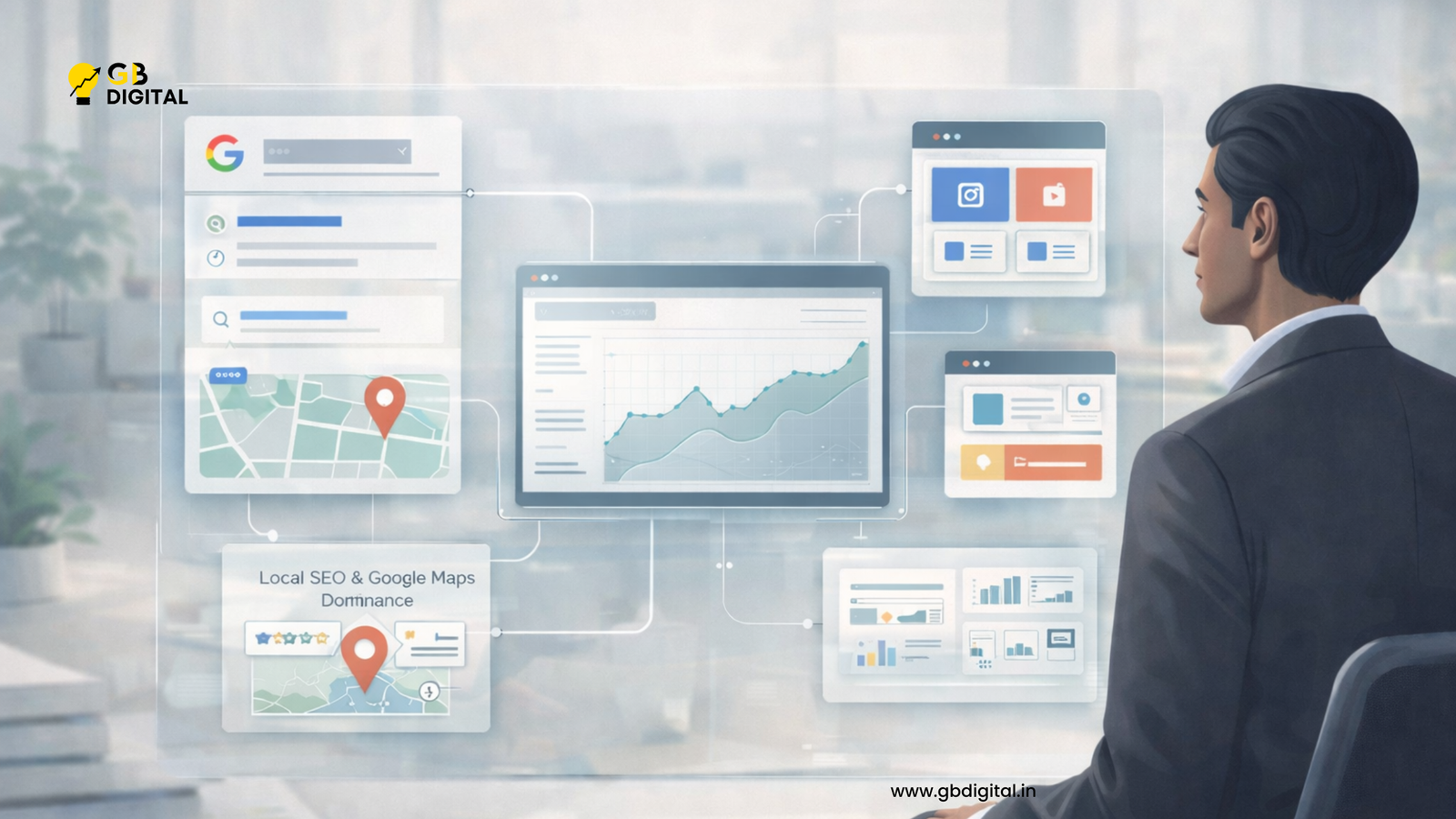
In 2026, customers don’t discover brands randomly. They search on Google, compare on Instagram, read reviews, and often need multiple touchpoints before trusting a business. If your brand is not visible or worse, confusing online, you lose customers silently every day. This is why having a structured online marketing guide for small businesses in India is no longer optional.
This Digital Marketing Guide for Businesses in India is written for business owners, founders, and marketing managers who want clarity, not jargon. No textbook definitions. No fake promises. Just practical insight based on how Indian consumers actually behave online today.
If your goal is sustainable growth not short-term noise this guide will help you understand what matters, what doesn’t, and how to approach digital marketing logically in the Indian market.
Understanding digital marketing in the Indian business context
Digital marketing in India works differently from global markets. This digital marketing guide for businesses in India explains how consumer behaviour, price sensitivity, local search intent, and trust-driven decisions shape a practical digital marketing strategy for Indian businesses today.
Digital marketing in India is fundamentally different from Western markets.
Indian consumers are:
- Highly price-conscious
- Trust-driven
- Mobile-first
- Strongly influenced by reviews and social proof
- Often bilingual or regional-language users
So digital marketing here is not about being everywhere.
It’s about being present where intent already exists.
For example:
- A local clinic doesn’t need viral reels; it needs Google visibility and reviews.
- A D2C brand doesn’t grow on content alone; it needs paid acquisition plus retargeting.
- A service business doesn’t convert with ads alone; it needs trust-building content.
In simple terms, digital marketing guide for businesses in India is the process of capturing attention, building trust, and converting intent – systematically.
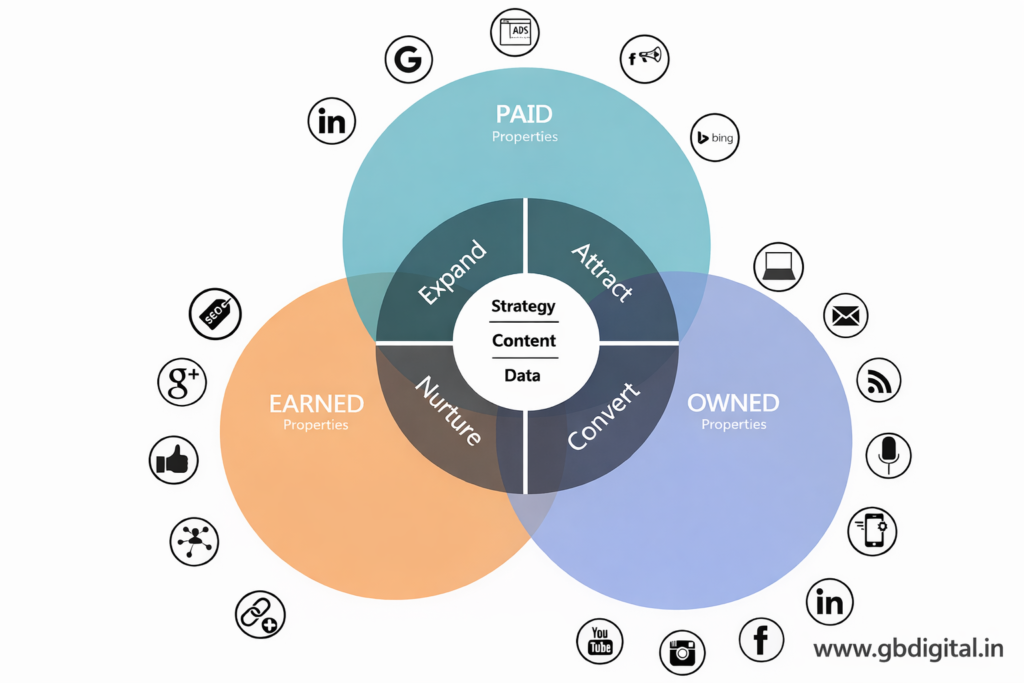
Digital marketing strategy for Indian businesses (step-by-step)
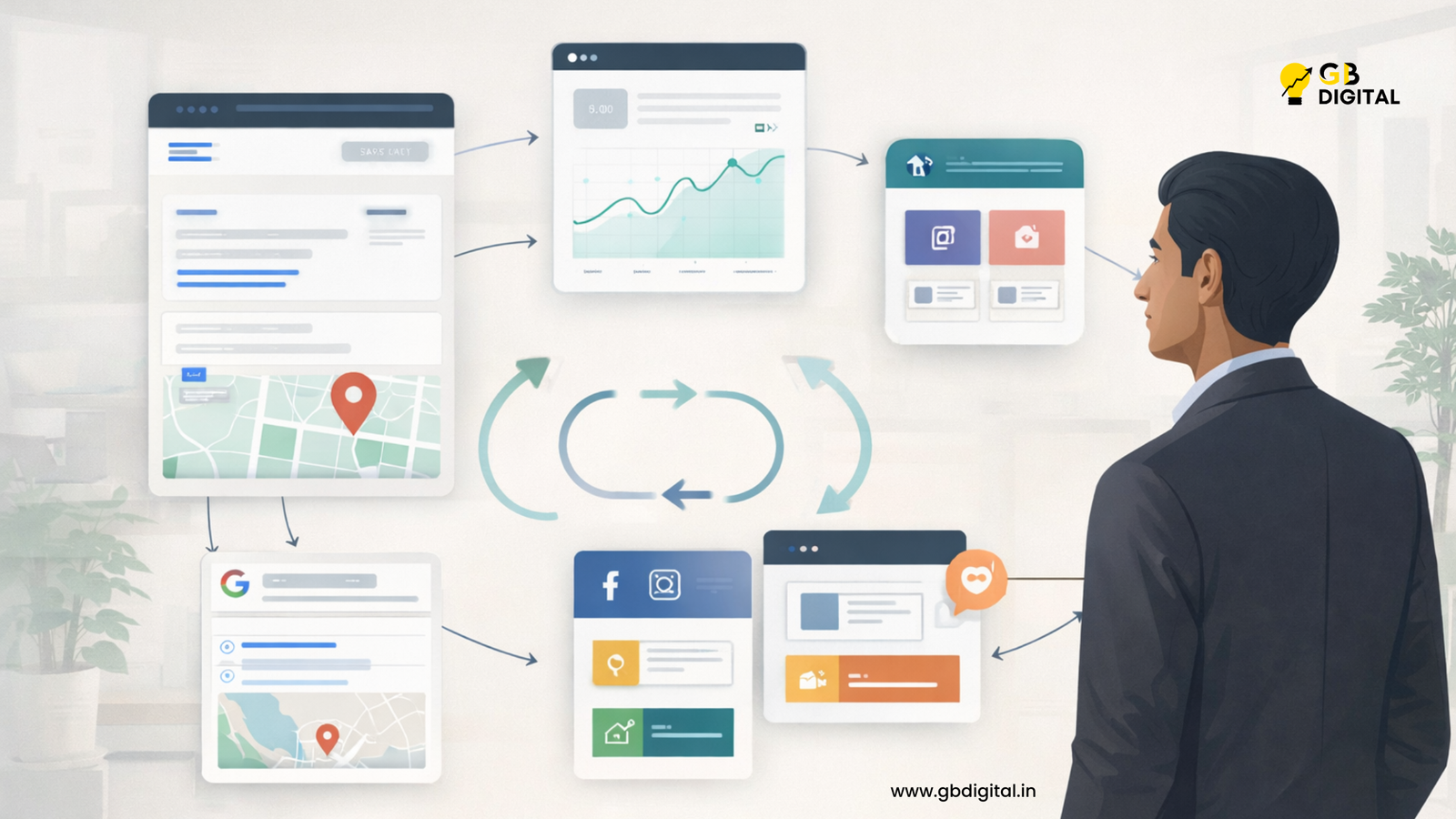
A strong digital marketing strategy for Indian businesses is not about tools or platforms—it’s about following the right sequence. This digital marketing guide for businesses in India focuses on clarity first, then demand capture, trust-building, and scaling. When the process is structured, digital marketing becomes predictable instead of chaotic.
Step 1: Fix the digital foundation
Before marketing, ensure clarity.
Ask honestly:
- Is your website clear within 5 seconds?
- Can users immediately understand what you offer?
- Is it mobile-friendly and fast?
- Is WhatsApp or call CTA visible?
Minimum foundation checklist:
- Clear homepage message
- Service/product pages with pricing or direction
- WhatsApp click-to-chat
- Basic analytics tracking
- Google Business Profile (for local businesses)
No strategy works if the foundation is weak.
Step 2: Capture existing demand first
This is the most profitable step and the most ignored.
People are already searching:
- “digital marketing agency near me”
- “salad subscription Mumbai”
- “wholesale jewellery supplier India”
These users have high intent.
Focus first on:
- SEO for service/product keywords
- Google Search Ads
- Google Maps optimisation
If demand exists, capture it before trying to “create awareness”.
Step 3: Build trust through content (not virality)
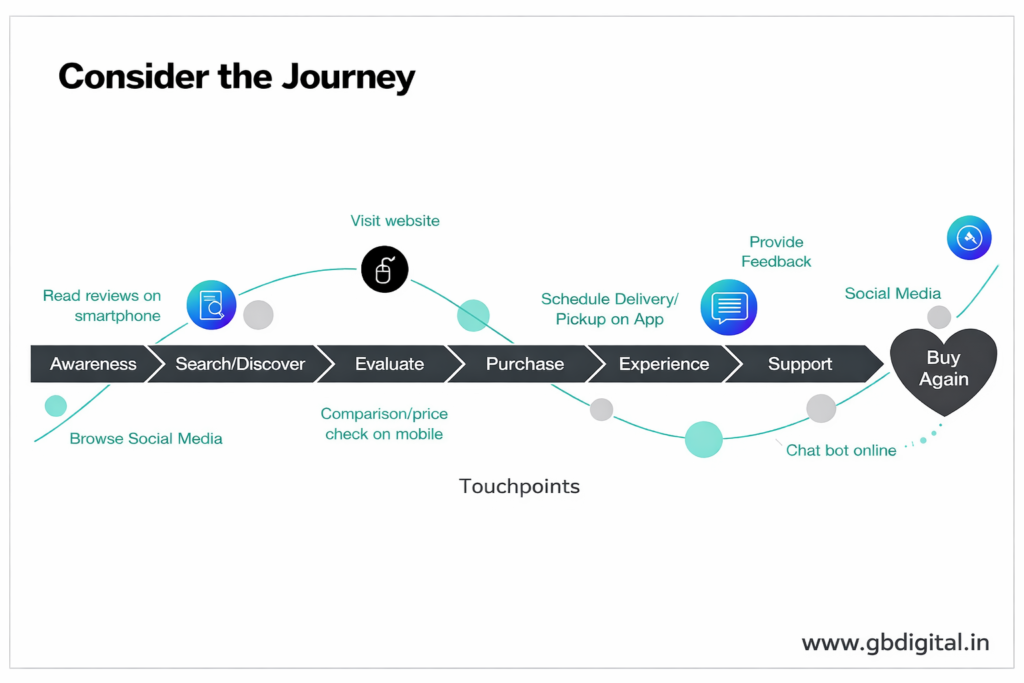
Indian users rarely buy at first touch.
Your content should answer:
- Is this brand genuine?
- Do they understand my problem?
- Have others trusted them?
Effective content formats:
- Educational reels
- FAQs-based blogs
- Comparison posts
- Testimonials and real work examples
Content is not for likes.
It’s for reducing hesitation.
Step 4: Use paid ads with structure
Paid ads work only when intent and messaging are clear.
Before scaling ads:
- One campaign = one objective
- Landing page must match ad promise
- Conversion tracking must be active
Common mistake:
Running traffic or engagement ads and expecting sales.
Ads should support a system, not replace one.
Step 5: Retarget consistently
Most Indian buyers need 3–7 touchpoints.
Smart businesses retarget:
- Website visitors
- Instagram engagers
- WhatsApp clickers
Retargeting:
- Costs less
- Converts better
- Builds familiarity
This is where digital marketing becomes profitable.
Common digital marketing mistakes Indian businesses make
Despite growing awareness, many Indian brands still misuse digital channels. The biggest problem isn’t effort it’s direction. This digital marketing guide for businesses in India highlights recurring errors that weaken even well-funded campaigns. Without a clear digital marketing strategy for Indian businesses, these mistakes repeat and quietly block growth.
- Starting with ads instead of clarity – Ads amplify confusion if messaging is unclear.
- Copying competitors blindly – What works for funded startups may fail for local or bootstrapped businesses.
- Ignoring local SEO – Many businesses run ads while their Google Maps profile is poorly optimised.
- Expecting instant SEO results – SEO compounds over time. Quitting early kills momentum.
- Measuring vanity metrics – Likes don’t equal leads. Followers don’t equal revenue.
Tools, methods, and best practices that matter
Tools don’t grow businesses.
Decisions do.
Essential tools most Indian businesses should use:
In this digital marketing guide for businesses in India, tools support decisions not replace them. When used within a clear digital marketing strategy for Indian businesses, the right tools help measure results and optimise growth.
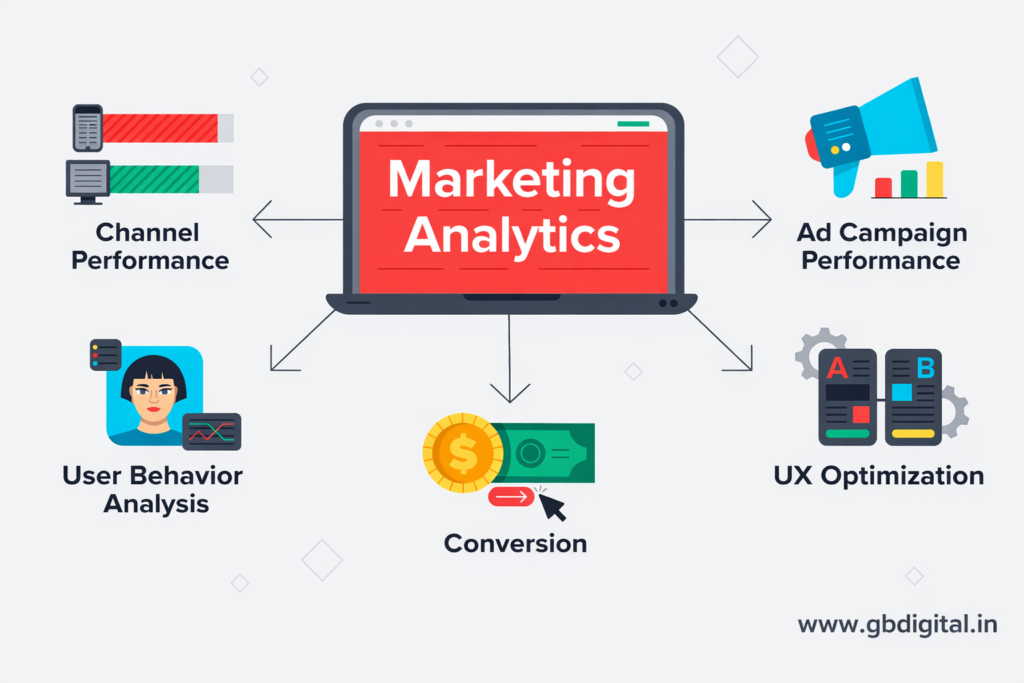
- Google Analytics – understand user behaviour
- Google Search Console – track search performance
- Meta Ads Manager – structured ad control
Follow official documentation and best practices from Google and Meta instead of random “growth hacks”.
Best practices that outperform tools:
This digital marketing guide for businesses in India shows that strong execution matters more than tools. With a clear digital marketing strategy for Indian businesses, best practices drive results.
- Focus on one channel at a time
- Optimise before scaling
- Track conversions, not impressions
- Speak customer language, not marketing jargon
Real-world application: how Indian businesses apply this
This digital marketing guide for businesses in India focuses on how strategies work in practice not theory. When Indian brands follow a clear digital marketing strategy for Indian businesses, they turn online efforts into consistent leads, lower costs, and long-term visibility.
Let’s look at a practical execution pattern, not a fake case study.
Typical successful approach:
- Fix website messaging and speed
- Optimise Google Business Profile
- Create SEO pages for core services
- Run Google Search Ads for high-intent keywords
- Use social content for trust
- Retarget consistently
This approach creates:
- Predictable leads
- Lower acquisition cost
- Long-term organic visibility
This is how digital marketing works in reality, not in presentations.
Digital marketing guide for businesses in India is no longer optional but it’s also not magic.
Businesses that grow consistently online:
- Focus on intent, not trends
- Build trust before pushing sales
- Measure business outcomes, not vanity metrics
- Create systems instead of chasing shortcuts
This Digital Marketing Guide for Businesses in India (Complete 2026 Guide) is designed to help you think clearly, plan logically, and grow sustainably.
The next step isn’t doing everything.
It’s doing the right things, in the right order.
Frequently Asked Questions (FAQs)
Digital marketing for businesses in India means using online channels like Google, social media, websites, and ads to reach customers while accounting for local intent, mobile usage, price sensitivity, and trust-based buying behaviour.
There is no single best strategy. Local businesses perform best with local SEO and Google Ads, while D2C brands rely more on paid ads and retargeting. The right strategy depends on the business model and audience intent.
Most small and mid-sized businesses start with 5-10% of expected monthly revenue. Budgets should focus first on high-intent channels before expanding into awareness or branding campaigns.
Digital marketing offers better targeting, tracking, and scalability. However, some Indian businesses benefit from a mix of offline and online marketing when aligned strategically.
Paid ads can generate leads within weeks. SEO and organic marketing typically take 3–6 months to show consistent results, depending on competition and execution quality.